Friday, March 24, 2006

Stirling Castle

Neil's parents arrived on March 17th. That week-end they took us on a road trip to the Western coast of Scotland. Our first stop was Stirling Castle.


Stirling Castle seen from a distance. Like Edinburgh it sits on its high volcanic rock, visible for many miles in every direction. Many a battle has been fought in the castles immediate vicinity, two of which were turning points in Scottish history; Battle of Stirling Bridge and Battle of Bannockburn.

This is the most famous king in Scottish history, no not that Braveheart dude, but Robert the Bruce. Now for a bit of history, in the early years of the 14th century Edward I of England had control over Scotland. As many of us know from the film Braveheart, a fellow named William Wallace rebelled againts the English nobles and defeated the English at the Battle of Stirling Bridge. However Scotland still did not have her independence nor a king to rule her. This is where Robert the Bruce comes in. He was a rightful heir to the throne and decided to get his back. An English nobel was holding Stirling Castle and Bruce gave him an timeline in which to leave the castle or he would attack. Of course this triggered the English army into moving into Scotland to meet Bruce in battle. In 1314 the English marched an army of 40,000 troops to meet Bruce and his army of only 13,000. Now this is one of the greatest moments in Scottish history, as Bruce and his men annihilated the English in what is known as the battle of Bannockburn. Scotland had her independence and her king at last.

Neil and his mommy entering the Castle gates.

The castle up close. Here we have the palace where the royal family lived, and the Great Hall where the royals partied. The building has gone through, and is still going through, major restoration.

Tuesday, March 07, 2006

The Somme

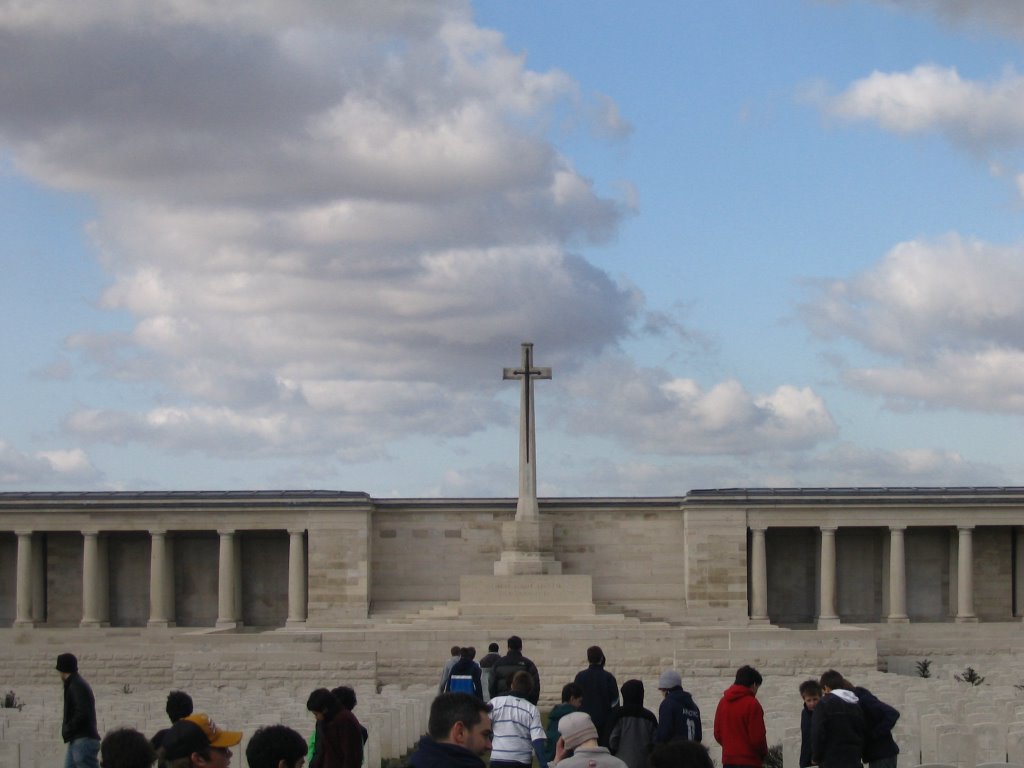
For the remainder of the third day we made our way to the Somme. This is the area where the most disastrously and deadly battle of W.W.I. took place. On July 1st 1916 thousands of commonwealth soldiers marched into no mans land and faced almost complete annihilation. As we drive about the country side the amount of cemeteries we saw makes you aware of just how many lives were lost. Below are three such cemeteries that we saw here at the Somme.


This is Thiepval, the largest memorial on the Somme with over 72,000 names on it. To think that the bodies of the soldiers were never found made me feel unbearable sad. You never really understand the destruction of W.W.I until you see it with your own eyes, and even then you can only imagine.

Lets hear it for the boys. This group of 60 fourteen year olds were extremely well behaved and respectful on this journey. I had an amazing time, and know that we all will have amazing memories of the time spent exploring the western front.

Vimy Ridge

This is a view from the bus as we drive up to Vimy Ridge, the Canadian memorial in France, on the third day of our journey. As you can see the land is still covered with shell holes. I can't imagine what it must have been like for our country men to make there way over land freshly dug up by shells that were probably still falling as they ran.

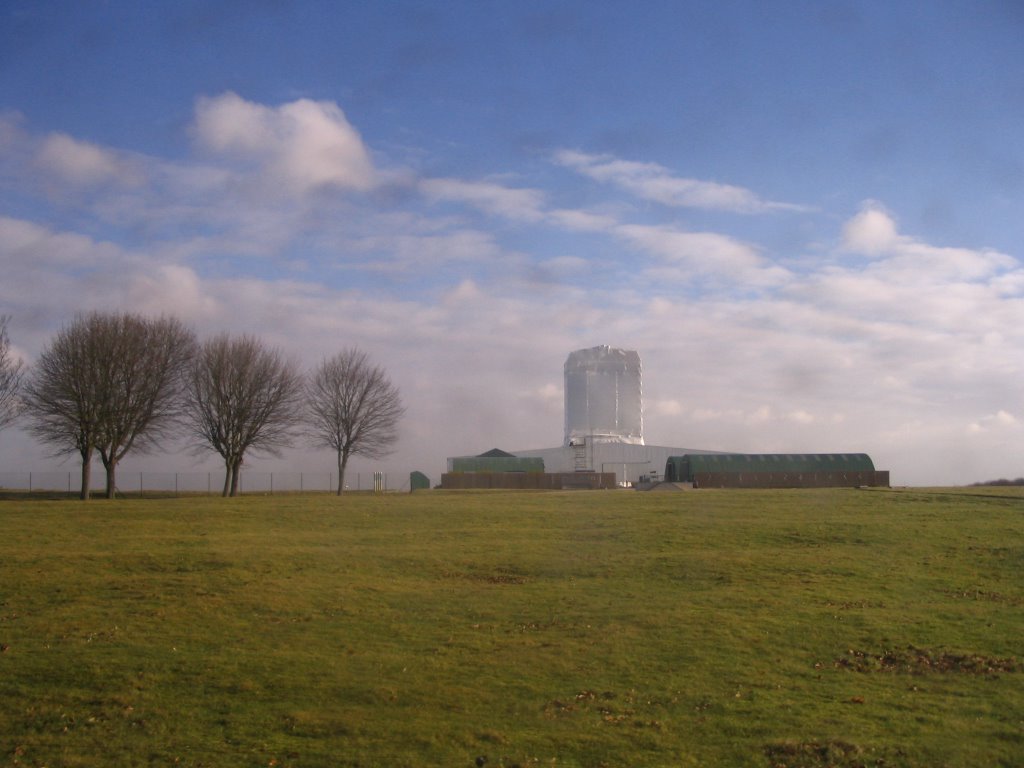
Unfortunately the memorial was closed due to repairs, and as it was completely covered up I could only capture an image of how big the memorial is. Seeing how it towers over the surronding landscape, it goes to show how big of a role Canadians played in this war.

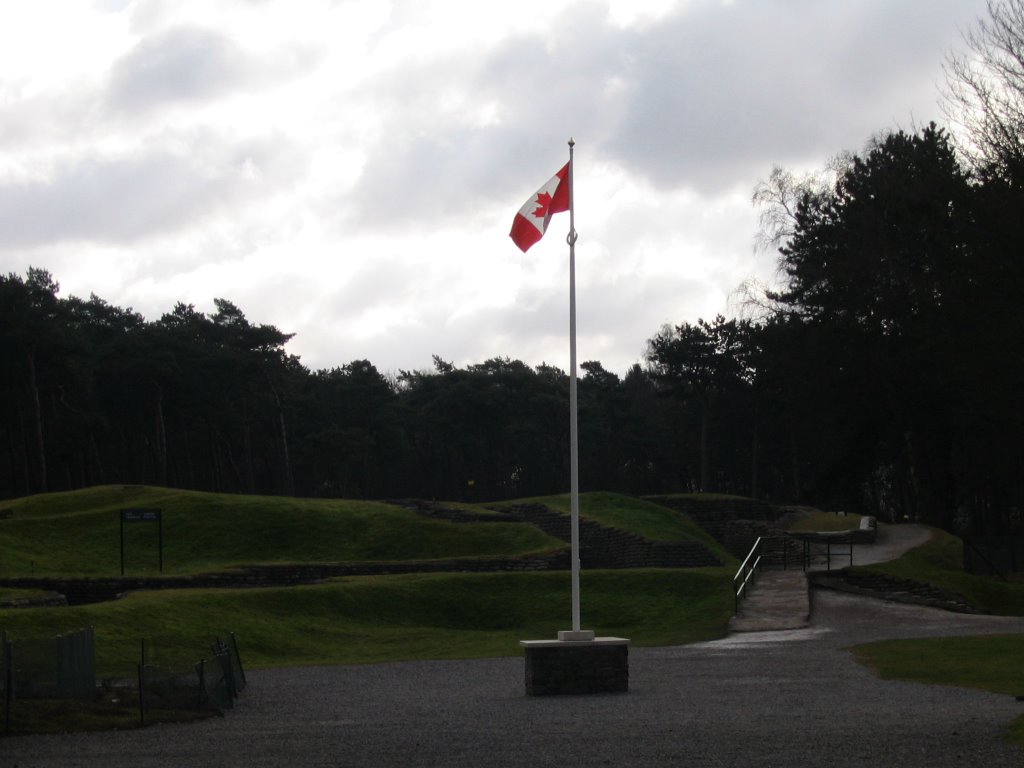
We were, however, able to go to the Canadian Western Front trench lines. The pupils had a great time running around here imagining what it would have been like during W.W.I.

Being the only Canadian on this trip I think I had my picture taken by everyone. I felt extremely proud to think of how much my country devoted to winning this war, and that our sacrifice will always be remembered by such a remarkable memorial site.

Langemark Cemetery

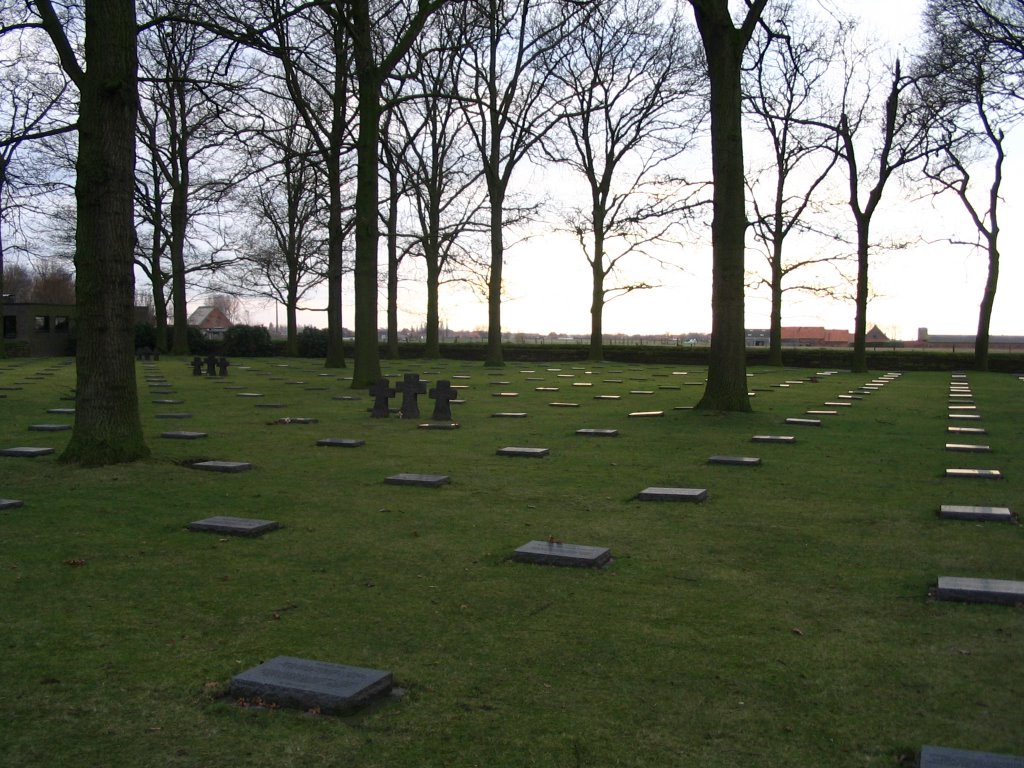
There are more then 40,000 German soldiers buried here. As you can see from the drastic contrast with the last cemetery the Germans really wanted to keep things dark and somber.

The Germans had to work hard to obtain the land on which to bury their dead as the allies were not too keen to give up land to their hated enemies. Of course the willingness to make sure a war like this never happened again, an arrangement was made for all soldiers to have a place to rest and a place for people to go and remember the destruction of life that occurred.

Tyne Cot Cemetery


This is one of the largest Commonwealth cemeteries, with more than 12,000 graves.


With the wall around the cemetery holding some 35,000 names, it was impossible to read all the names. I could not find McKell, but I did find our ancestral name of Meikle on the Scottish soldiers wall. Maybe a long lost relative?

Their Name Liveth Forever More

Tuesday, February 28, 2006

Ypres

I knew we were in Belgium when I noticed that every other building had a Stello Artois sign. This was taken in the town of Ypres which we visited on our second day.

This is the former town hall of Ypres, also known as the Cloth Hall. It now houses the Flanders Field museum, which was one of the most moving museums I have ever visited.

Ypres saw a lot of action during W.W.I, and suffered almost complete destruction, as illustrated in this painting. Like other villages near the front line, Ypres was tastefully restored to it's former glory.

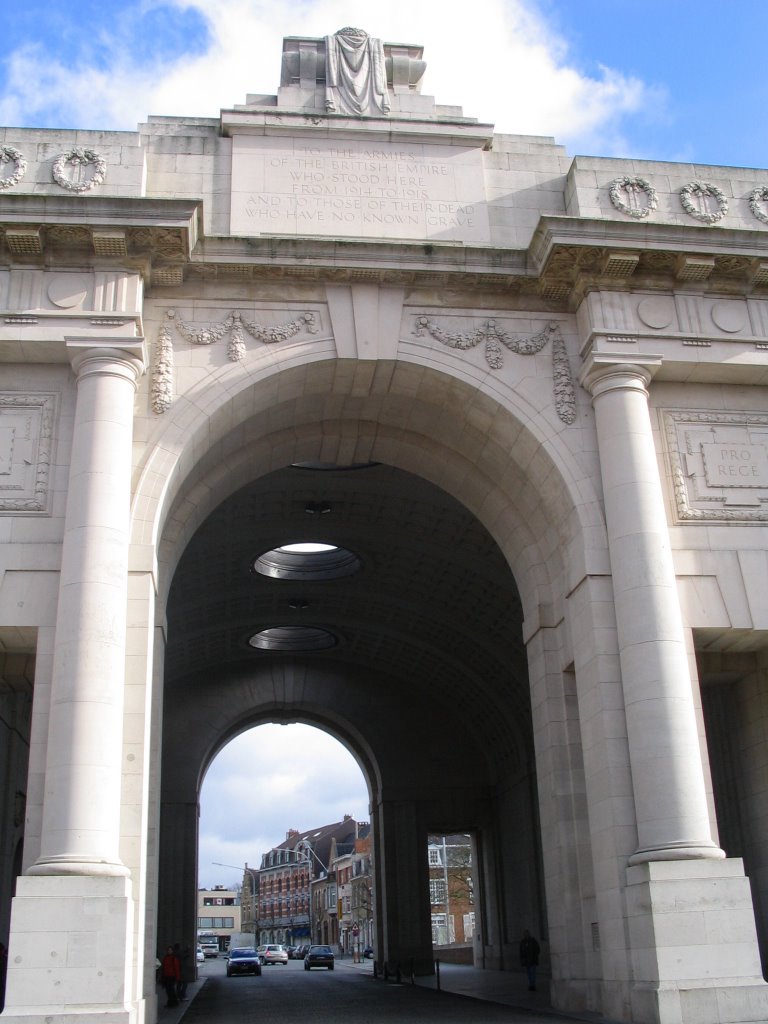
This is the Menin Gate. It was through this entrance to the village that the allied forces provided the troops with constant reinforcement and supplies. The Menin Gate Memorial was erected in memory of all the soldiers who lost their lives fighting here, and the walls of this huge structure hold the names of all the men who's bodies were never found.

This is just one of the several walls devoted to the Canadian soldiers who lost their lives.

Sunday, February 26, 2006

Notre Dame de Lorette

Notre Dame de Lorette is the largest W.W.I French cemetery.

A countless number of graves for the many French soldier who died here on the Western Front. I wanted to try and see if there were any Chartrand's buried here, but the graveyard was just too big.

The trenches still remain after all these years in the fields behind the church.

Sunday, February 19, 2006

Arras

Here we are in the medieval square of the town of Arras. Arras was at the centre of much of the fighting in World War I, and being right behind the Front Line it was under constant bombardment by enemy shelling.

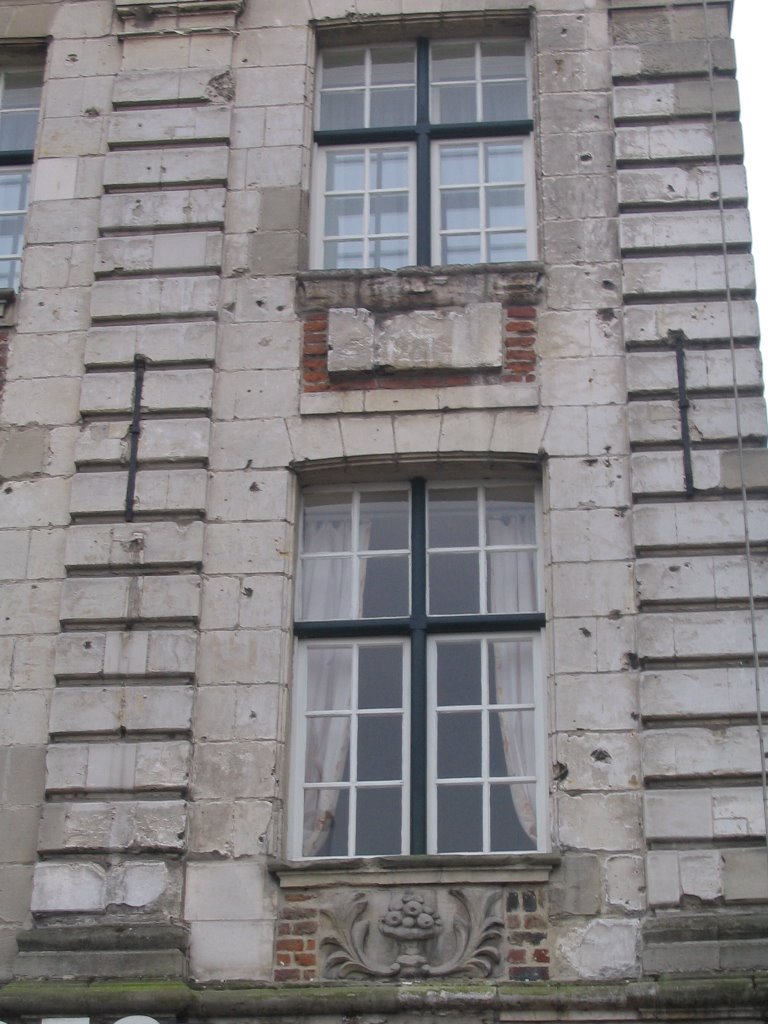
After the war the whole town lay in ruins. While the old houses around the square were rebuilt evidence of the war is still evident.

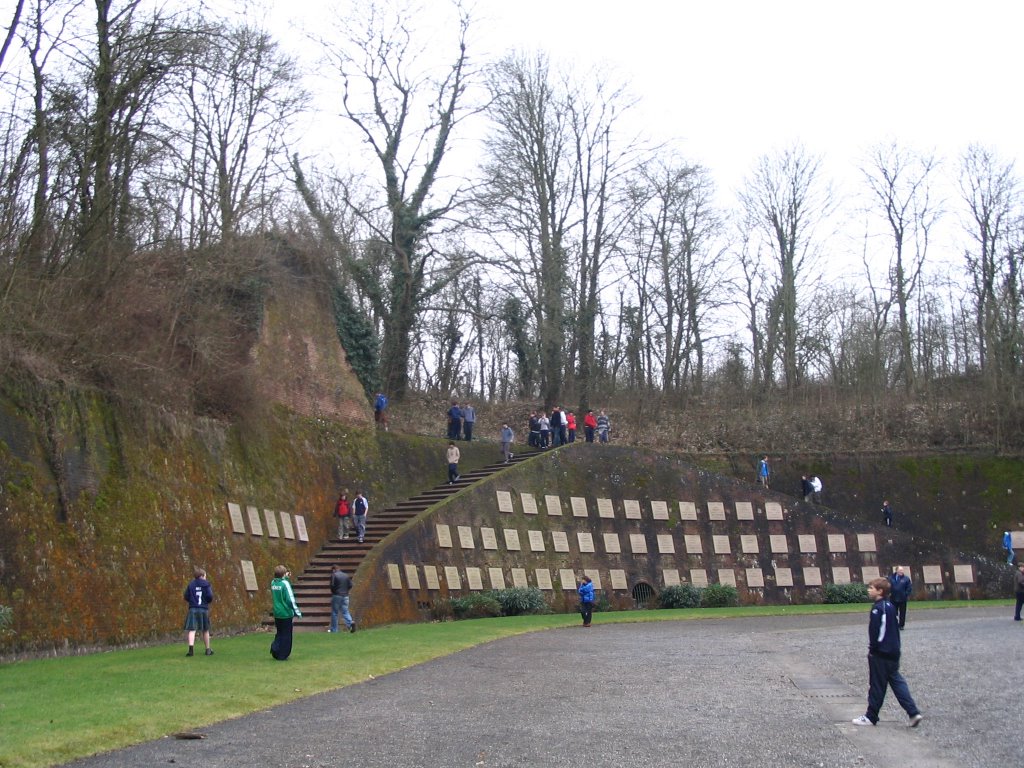
After a wander around the village we made our way to this extremely spooky memorial site. It lies just outside the walls of the ancient Citadel of Arras.

It was here, during WWII, that German soldiers executed 218 allied troops of all origins.

This is the Commonwealth cemetery Faubourg-D'Amiens, and it was but the first of many cemeteries we would see on our journey.

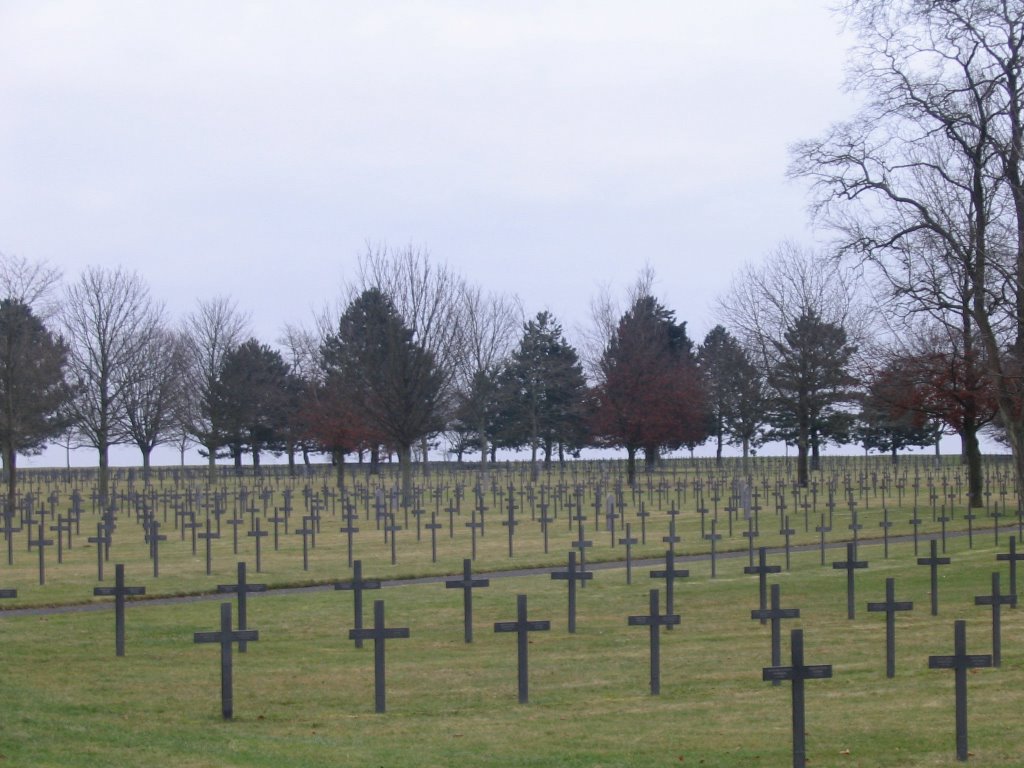
Here we are at a German cemetery. The contrast between the Commonwealth and German cemeteries are amazing. The Commonwealth cemeteries are neatly kept, white and heavenly, while the German cemeteries, as you can see, are dark, grey and depressing. This cemetery seemed endless, and the amount of people buried here is horrendous. Each grave marks the burial site of 4 soldiers.

These tomb stones mark the site of a German mass grave, where the bodies of over 18,000 bodies were found.

My trip to France

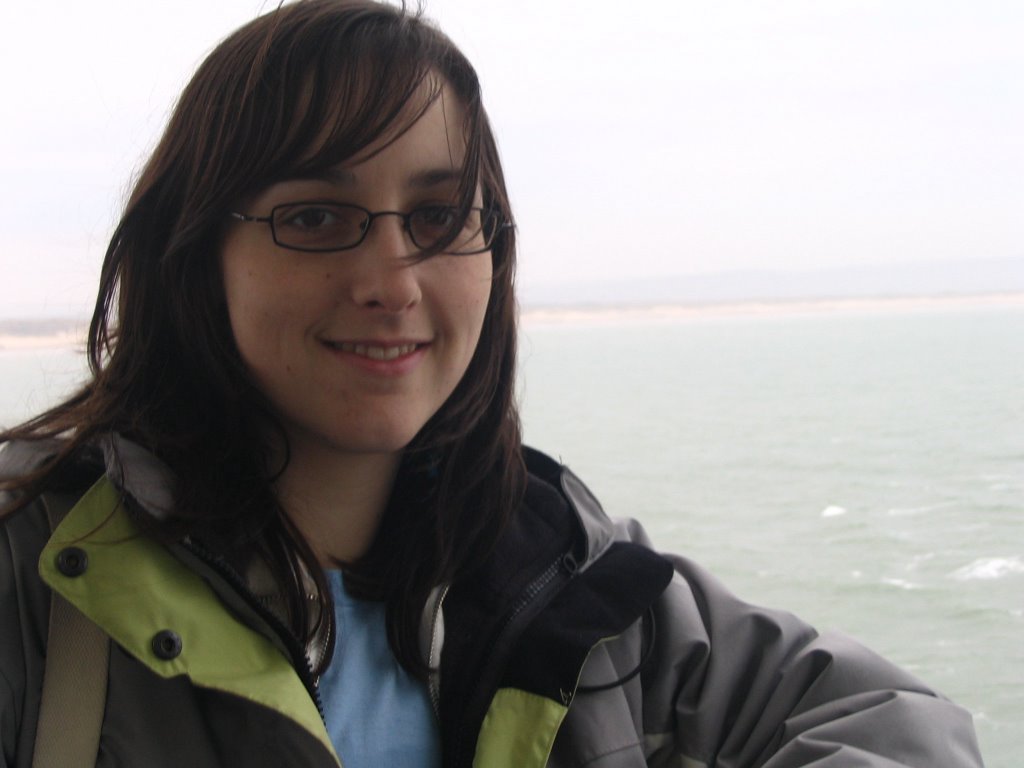
Here I am on the ferry traveling from Dover, England to Calais, France. I was very excited about being able to take part in this class trip to the Battle Fields of WWI with my placement school.

My first view of France, the other half of my ancestor's homeland.

Friday, February 10, 2006

Burns Night

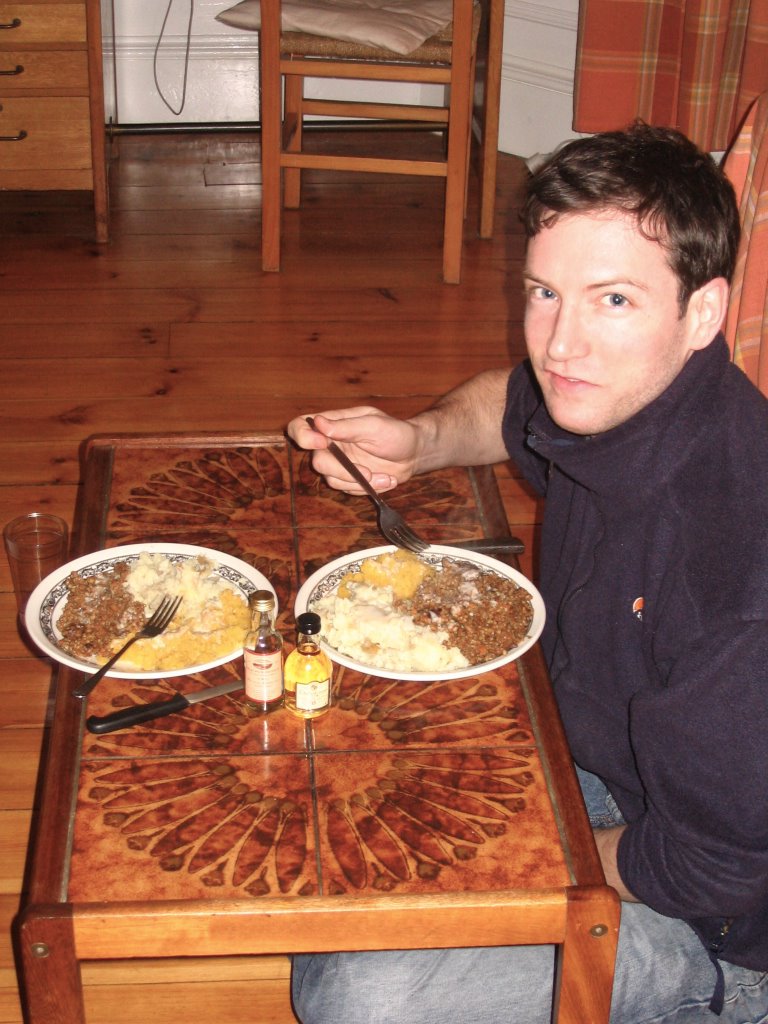
Every January 25th the Scots celebrate the poet Robert Burns by eating Haggis, neeps and tatties (turnips and potatoes) and drinking lots of whisky. Burns wrote a lighthearted poem called "Ode to the Haggis", and the night which uses the poem as part of a traditional procession to commemorate Burns has been celebrated for over 200 years. And while this dinner may not look very appetizing, it tastes amazing.

We decided to join in the celebration and made our own Burns night dinner. The haggis went down with success, however we still have not grown accustomed to the taste of whisky.

Caerphilly Castle

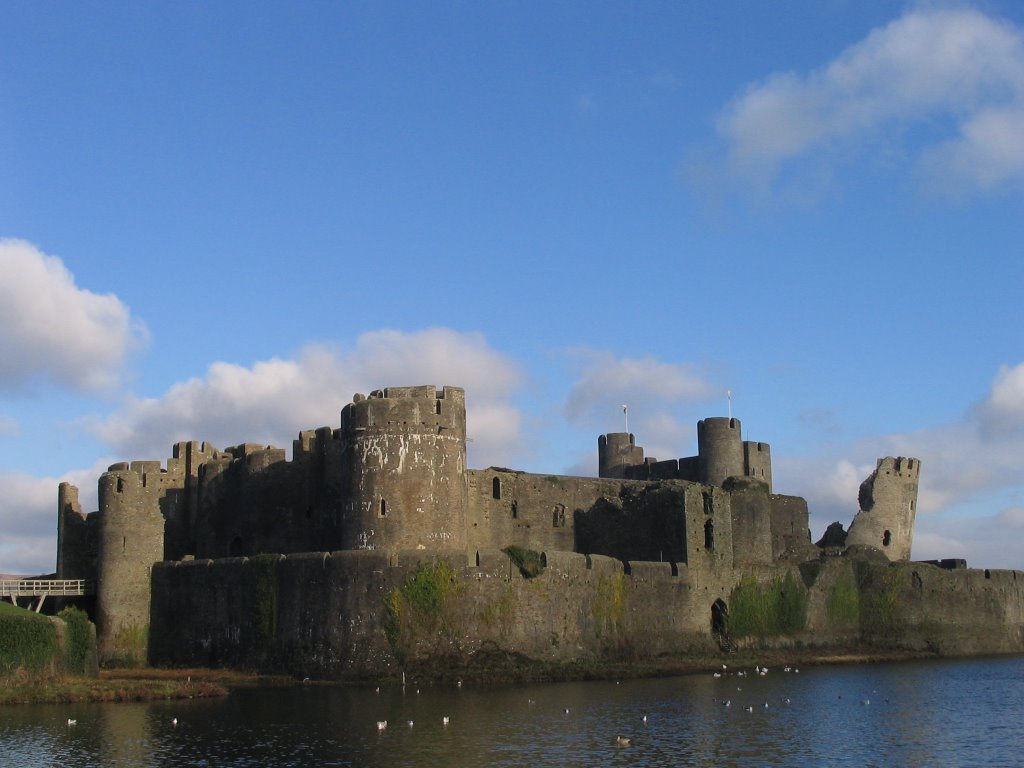
Caerphilly Castle is Wales's largest moated medieval castle, as well as one of the largest fortresses in Britain. It is famous for it's leaning tower which you can see on the right side of the photo.

The castle was built in the late 13th century to defend the town from rival princes.

Our last day in Wales was well spent taking in this impressive site.

Sayard felt right at home.

A view, through a soldiers look out, of the village of Caerphilly.

Wednesday, February 01, 2006

Boxing Day

Another Christmas has come and gone. Neil and Tal play one last time before Lloyd and Nic head off.

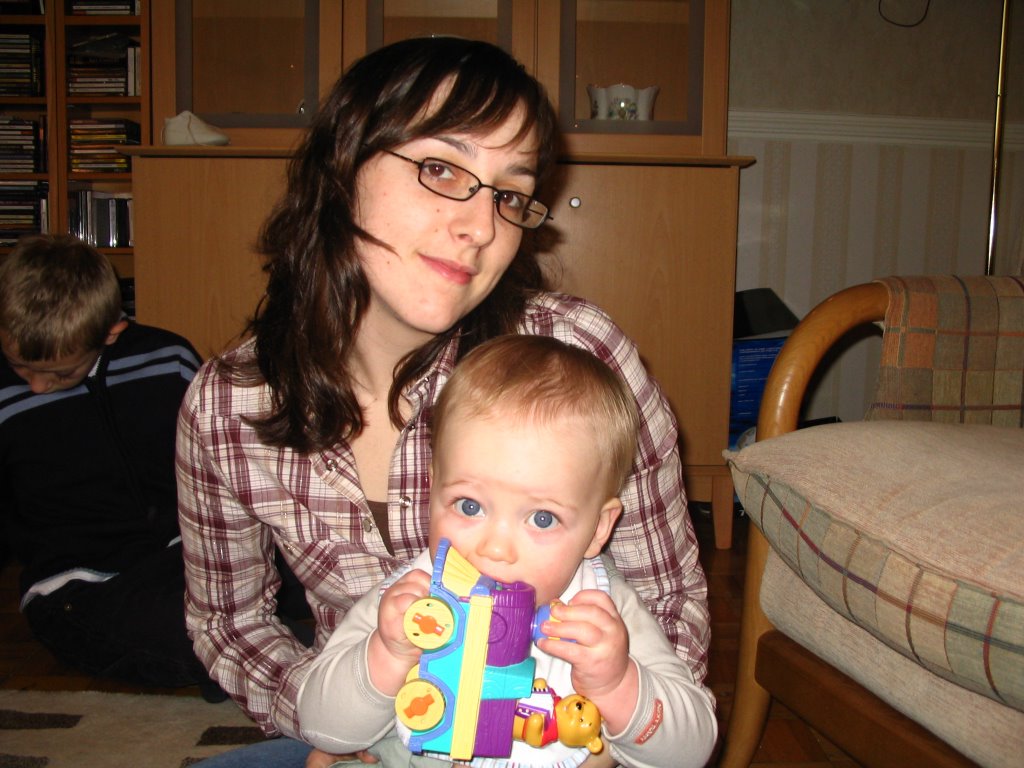
Baby and me.

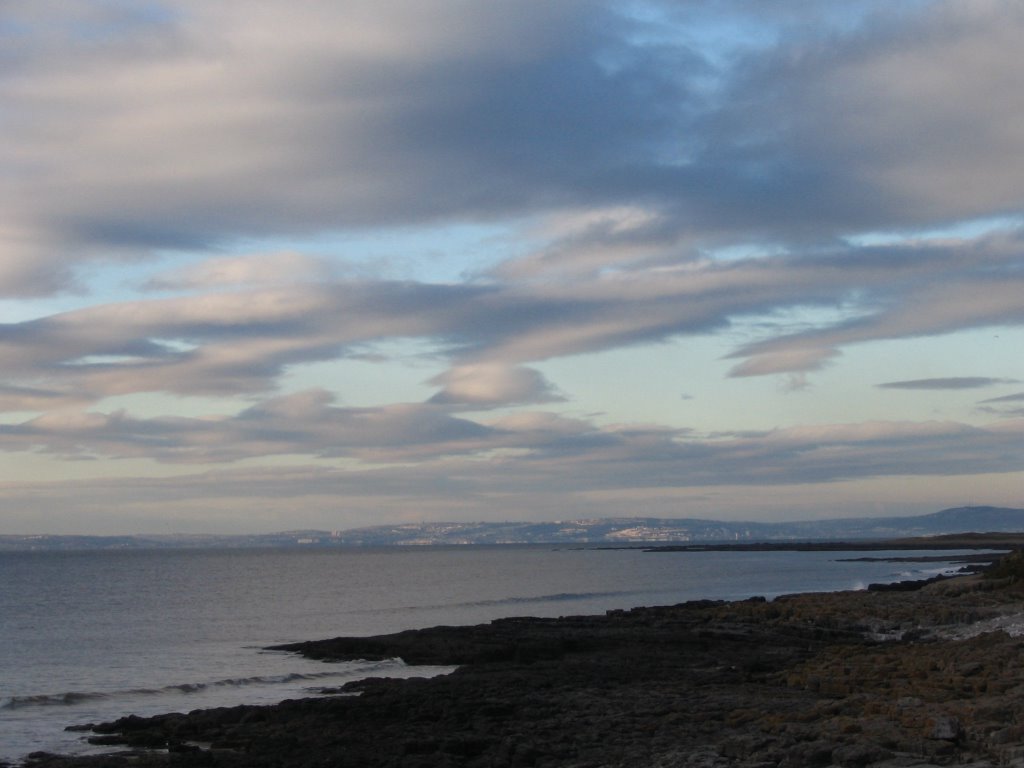
After the good-byes had been said, Ruth, John, Rhys took us to the sea. We were quite amazed that the day after Christmas we were taking a stroll along to coast line.

Such a nice family.


Rhys

young love

The boys at play.


I love the fact that we had ice cream by the sea on boxing day. How crazy is that! It was really good ice cream too!!

Ruth and John thought we were crazy, but Rhys certainly enjoyed his ice cream oyster.

The sun sets and it starts to get cold. We head home after a beautiful day at the beach.